














|
|
|
| Punched Card MachinesPrior to the actual period of computers the automatic data processing was handled mainly by punched card machines. The age of punched card machines is calculated to have started in 1890 when Mr. Herman Hollerith designed the first punched card machines for the population cencus of the United States. He was inspired by the punched card programming of a weaving machine. Mr. Hollerith founded a company for manufacturing and selling his machines. The company is known as IBM since 1924. The ascendancy of the punched card machines continued until 1960s when they were replaced by real computers. Some punched card machines were in use even in the 1980s as some minor part of computers.
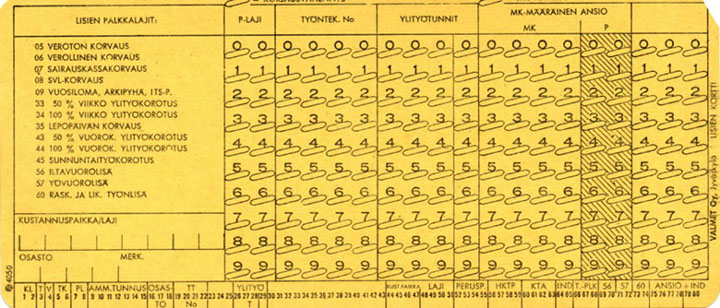
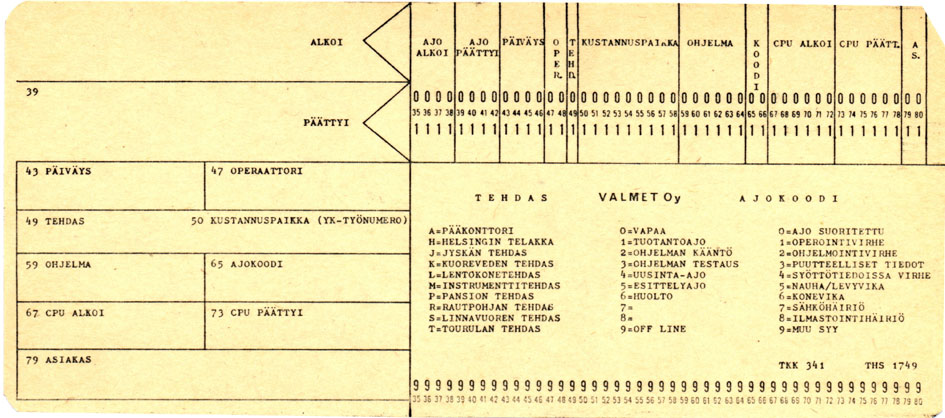
Punched CardA punched card is a card made of special cardboard designed for punched cards. The size of the card is 82 * 186 millimeters which are - by the way - the same measures that were used previously in the US dollar. The card has 12 lines and 80 columns. The card can be perforated with rectangled holes by special devices. In the original cards developed by Mr. Hollerith the holes were circular. The location of a hole specifies the value of the current information. Holes on the lines 0 to 9 corresponded the numerical values from 0 to 9. It was also possible to save and handle alphabetical information and special characters on punched cards. For this purpose lines 11 and 12 on top of the card were used. Each alphabetic letter or special character was corresponded by a double perforation at the same column e.g. 12,1 = A. Horizontally the card could be separated to information fields that could be handled (sum up, copy, sort, print) by punched card machines. The card could also include printing that cleared out the purpose of the card and its information fields. Some card types had also space for microfilm at the right lower corner of the card. The microfilm could include blueprints or pictures.
The value of each column was usually written by clear text at the top of the punched card. This value was usually printed by a keypunch machine. Special interpretation machines e.g IBM 557 were used to translate desired information fields to clear text. These translated information fields could also be written in some different position of the card than on the top of the card. Different examples of punched cards:
Later punched cards were used in several different purposes e.g. saving microfilms, transportation tickets and voting cards. Especially popular application was so called Mark Sensing - card. Mark Sensing card was a normal punched card equipped with printed Mark Sensing mark positions. It was possible to underline desired value to these positions by using a special Mark Sensing pen. It was possible to recognize these lines by a punched card machine and change them as perforations to the card by using e.g. an accessory for IBM 519 duplicating machine. The reading of these lines was based on the electrical conductivity of the line made by Mark Sensing pen. Mark Sensing cards were popular in portable data collection. Electricity meter reader assembler had a sheaf of pre-perforated Mark Sensing cards about consumers of electricity. He only had to underline new meter reading on the card by using Mark Sensing pen. After that it was possible to do all further processing of the information until printing an electricity invoice by using machines.
Punched Card Machines
IBM Keypunch Machine 026
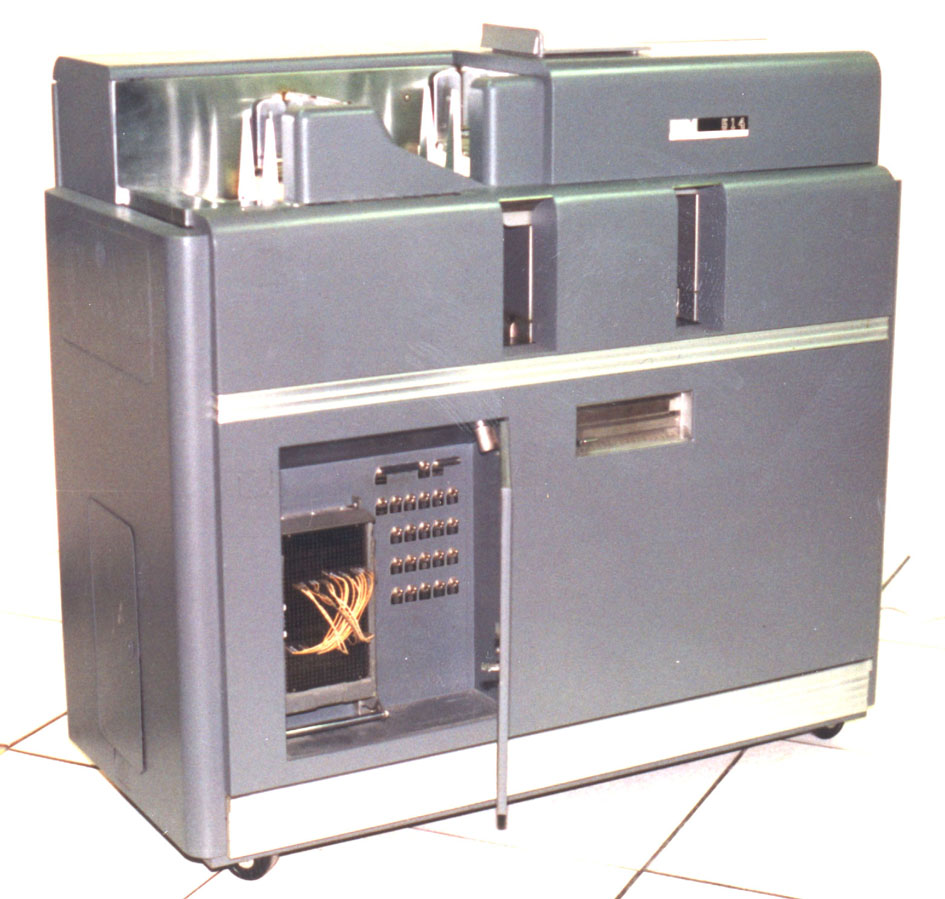
IBM Punched Card Duplicator Machine 514
IBM Calculation Punch Machine 602
IBM Sorting Machine 083
IBM Card Collator 077
IBM Tabulator 444
IBM Alphabetical Translation Machine 557
Send e-mail to the Association. |